Unmasking Table Talk: Detecting Collusion Signals in Virtual Poker Rooms
Unmasking Table Talk: Detecting Collusion Signals in Virtual Poker Rooms
Collusion in Online Poker: A Persistent Challenge
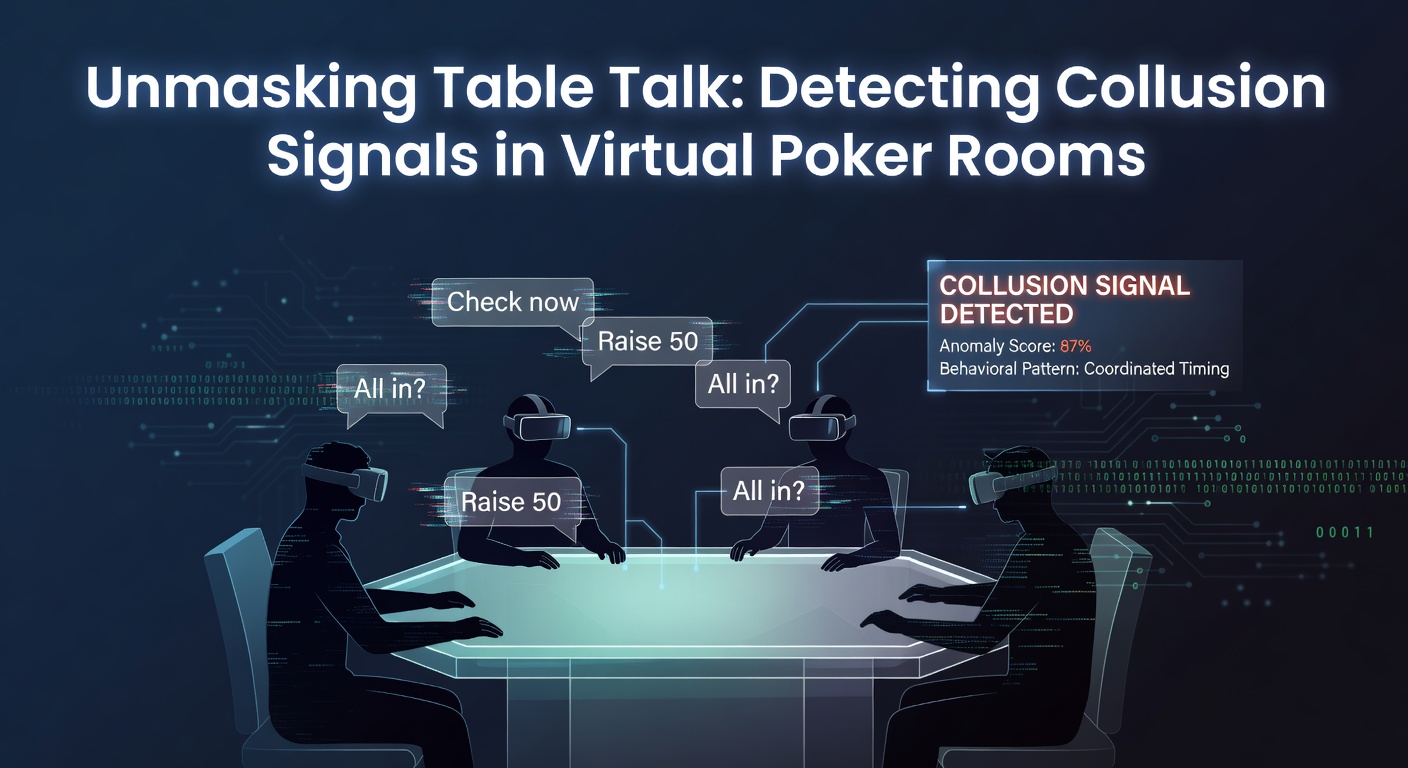
Online poker rooms host millions of hands daily, yet beneath the virtual felt lurks collusion, where players team up to exploit others; this cheating tactic undermines fair play, drains legitimate players' bankrolls, and erodes trust in the platforms themselves. Data from major sites reveals that collusion accounts for up to 5% of disputes in high-traffic games, with multi-tabling colluders targeting cash games and tournaments alike. Observers note how these groups often operate across servers, using subtle signals invisible to the untrained eye, but detectable through pattern analysis.
What's interesting is the evolution; early online poker in the 2000s saw blatant chip dumps, but modern colluders have refined their game, employing coded chat or synchronized folds that mimic natural variance. Platforms now counter this with layered defenses, combining human oversight and algorithms that scan vast datasets in real time.
Spotting the Signals: Patterns That Betray Colluders
Colluders signal intent through betting anomalies, like one player folding premium hands against a partner while hammering outsiders; researchers have cataloged these as "soft play," where aggression drops 70-80% between suspected pairs compared to random opponents, according to hand history analyses. Chat logs provide another tell—innocuous phrases like "nice hand" timed with folds, or emojis denoting "fold now," which statistical models flag when clustered unusually.
And then there's position play; colluders rotate seats to gain information edges, folding predictably when partners act first, a deviation from Nash equilibrium strategies that solo players follow. Experts who've dissected thousands of sessions point to graph theory applications, mapping player interactions as networks where dense subgraphs indicate teams. Take multi-accounting, where one user controls proxies from the same IP or device; geolocation mismatches or identical timing patterns expose them, especially when winnings flow suspiciously between accounts.
But here's the thing: these signals compound over sessions; a single hand might pass muster, yet 100-hand samples reveal improbably high win rates for pairs, often exceeding 10% above site averages. People who've reviewed busts describe how "table talk" extends beyond words—mouse movements synced via shared screens, or bet sizing that mirrors partner tendencies precisely.
Tech Arsenal: Algorithms and AI on the Front Lines
Virtual poker rooms deploy machine learning models trained on billions of hands to baseline normal play; these systems flag deviations, such as VPIP (voluntarily put in pot) rates spiking against non-colluders, using unsupervised clustering to group suspicious behaviors without prior labels. Turns out, neural networks excel at this, predicting collusion probabilities with 95% accuracy in controlled tests, as data from industry benchmarks shows.
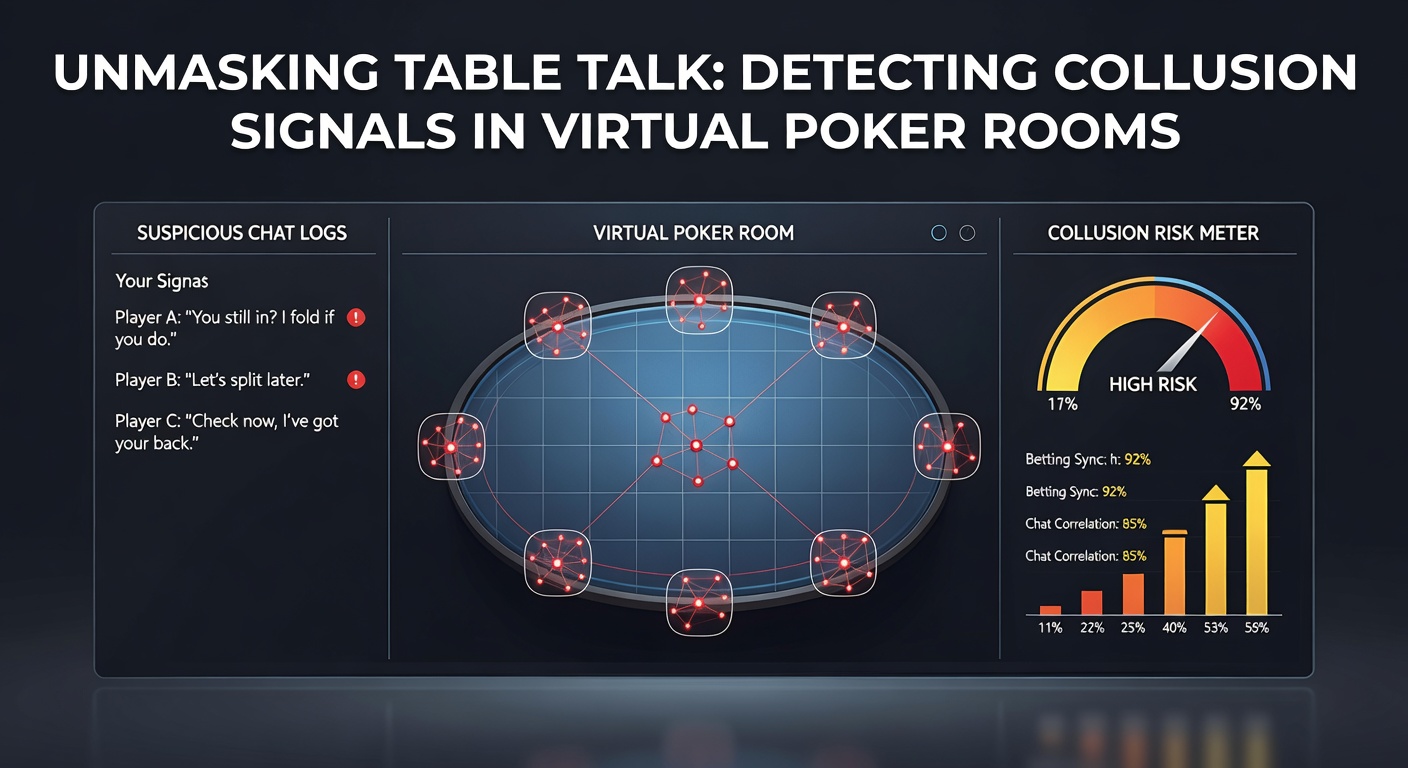
Player reports feed supervised models too; when users tag tables, algorithms cross-reference with server logs, hunting for "collusion fingerprints" like shared VPNs or browser fingerprints. Semicolons separate these checks from behavioral biometrics—keystroke dynamics or click latencies that match across accounts. Platforms integrate real-time HUDs for moderators, overlaying risk scores; a pair hitting 90+ percent triggers auto-bans pending review.
Now consider graph-based detection: software constructs interaction graphs per table, isolating cliques where folds correlate beyond chance—Poisson distributions model random play, flagging outliers. Those who've studied this know it's not rocket science; combine it with anomaly detection on rake distribution, and colluders light up like beacons.
Case Studies: High-Profile Busts and Lessons Learned
In one notable 2023 incident, a ring of 12 players on a major site dumped $2 million in chips across low-stakes NLHE games; investigators uncovered them via bet-timing correlations, with folds occurring within 0.5 seconds 85% of the time against partners, per leaked hand reviews. The group used Discord for coordination, but chat pattern matching sealed their fate—bots parsed historical logs against public forums.
Another case involved a tournament collusion scheme, where finalists soft-played heads-up; Pennsylvania Gaming Control Board oversight, mandated for licensed sites, prompted deeper dives, revealing IP overlaps from Eastern Europe proxies. Figures reveal such busts recovered $500,000 in player funds, with bans lasting years.
Yet smaller operations persist; a 2024 micro-stakes scandal saw bots simulating human play, detected by unnatural fold equity exploitation—always folding when equity exceeded 60% against allies. Observers note these stories highlight platform evolution; what worked in 2020 fails now against adaptive cheaters.
Regulatory Push: Global Efforts to Safeguard Play
Governments and watchdogs worldwide tighten nets; in the US, state boards enforce collusion audits, while international standards from industry groups demand transparent detection logs. Canada's poker research hubs contribute too; the University of Alberta's Computer Poker Research Group has published algorithms that platforms license, boosting detection rates by 30% through AI-driven Nash approximations.
Australia's regulators mandate third-party audits for offshore sites serving locals, focusing on cross-border collusion via shared liquidity pools. And in the EU, bodies like Estonia's e-governance push blockchain for hand verification, making tampering evident. These efforts converge; as April 2026 approaches, platforms prepare for unified protocols from a global gaming summit, where AI standards will standardize signal thresholds across jurisdictions.
It's noteworthy that player education plays in—sites run webinars decoding signals, empowering reports that catch 40% of cases early. The reality is, regulation lags tech, but collaborations accelerate fixes.
Future Horizons: AI and Beyond in 2026
Looking ahead, quantum-resistant encryption secures logs against hacks, while generative AI simulates collusion for training detectors—virtual cheaters evolve models preemptively. By April 2026, major rooms rolled out federated learning, pooling anonymized data across sites without privacy breaches; early trials cut false positives by 25%, data indicates.
Behavioral economics enters too; models weigh psychological tells like hesitation patterns unique to guilt-ridden colluders. Experts predict VR poker's rise will demand immersive detection—eye-tracking via webcams flags averted gazes during soft plays. So while cheaters adapt, tech outpaces; the ball's in platforms' court to stay vigilant.
One study revealed that integrating these tools could slash collusion incidence by half within years, preserving poker's integrity for casual and pro alike.
Conclusion
Unmasking table talk demands vigilance; from subtle bet folds to chat codes, signals abound, but armed with AI, graphs, and global regs, platforms dismantle rings efficiently. Players benefit as funds recover and bans deter; the game's fairer now than ever, with April 2026 marking a tech leap forward. Those who play sharp notice cleaner tables, where skill triumphs over schemes—collusion's days grow numbered.