Navigating Regulatory Shifts in Skill-Based Wagering Applications Across Borders
Skill-based wagering applications continue to expand globally as developers refine platforms that blend elements of chance with measurable player expertise, yet operators face an increasingly fragmented set of rules when services cross national boundaries. Research indicates that jurisdictions distinguish these offerings from pure games of chance through tests that evaluate the dominance of skill, and this distinction drives much of the current regulatory activity. Data from industry tracking services shows participation in such applications grew steadily between 2022 and 2025, prompting legislators in multiple regions to update definitions and licensing requirements.
Those who monitor legislative calendars note that several U.S. states refined their frameworks in early 2026, while Canadian provinces advanced harmonization efforts and certain Asian markets introduced pilot programs. Observers note the pattern: authorities often start with narrow carve-outs for daily fantasy formats before expanding oversight to broader skill-based products. This incremental approach creates both opportunities and compliance burdens for companies that serve users in more than one country.
Key Distinctions Shaping Global Rules
Regulators typically assess whether an application satisfies a predominant-factor test, meaning skill must outweigh chance for the contest to avoid classification as illegal gambling. Figures from academic reviews of state laws reveal that courts and agencies apply varying thresholds, and these differences matter when an operator launches the same product in adjacent markets. In practice, companies adjust scoring algorithms, payout structures, and marketing language to meet each locale's criteria while maintaining a consistent user experience.
What's interesting is how enforcement actions cluster around advertising claims rather than core mechanics. When promotional materials emphasize luck or guaranteed returns, agencies respond more quickly than when materials focus on strategy and long-term results. Studies from research institutions document this enforcement priority across North American and European jurisdictions, and the pattern influences how legal teams draft compliance manuals.
North American Developments Through Mid-2026
Within the United States, state attorneys general and gaming commissions have issued guidance documents that clarify licensing pathways for skill-based platforms. Several states now require operators to register as fantasy contest operators or obtain separate skill-gaming permits, and these registrations often include reporting obligations on user location verification. Meanwhile, Canadian provinces coordinate through the Canadian Gaming Association, which published updated best-practice guidelines in late 2025 that address geofencing and age verification standards applicable to interprovincial play.
Take one operator that adjusted its entry-fee model after regulators in two neighboring states adopted slightly different definitions of "entry fee versus wager." The company restructured prize pools and disclosure language, then documented the changes in filings submitted to both agencies. Such adaptations illustrate the day-to-day work of compliance teams that track rule changes on a weekly basis.
International Variations and Cross-Border Friction
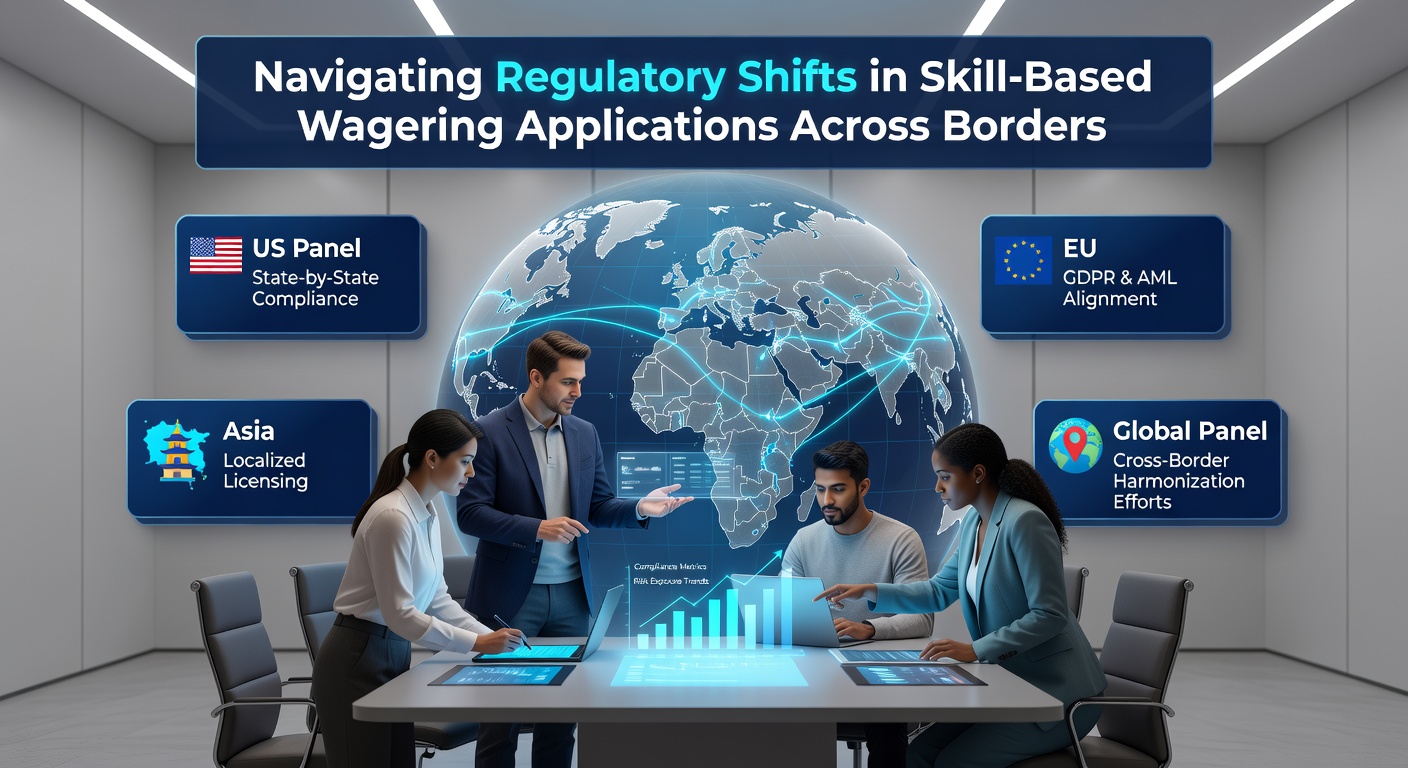
European markets present a different set of considerations because the European Union continues to refine its approach to online gaming under existing directives while member states retain significant latitude. Data compiled by industry associations indicates that countries such as Malta and Sweden maintain licensing regimes that accommodate skill-based formats, whereas others apply stricter interpretations that classify certain contest types as gambling regardless of skill elements. Operators therefore maintain separate legal entities and server configurations for different European corridors.
Further afield, regulators in Australia and parts of Asia have introduced sandbox programs that allow limited deployment of new skill-based products under heightened monitoring. According to reports from the Australian Communications and Media Authority, these programs require real-time data sharing and independent audits, and the results help shape permanent rules scheduled for review cycles in 2027. Companies that participate gain early market access while contributing evidence that later influences broader policy.
Operational Strategies That Address Shifting Requirements
Companies that succeed across borders typically centralize compliance functions while embedding local counsel in each target market. They deploy modular technology stacks that let teams toggle features such as contest types, prize structures, and promotional offers according to jurisdiction. Real-time geolocation services combined with identity verification tools help satisfy differing age and location rules without fragmenting the core product.
Yet the reality is that regulatory calendars rarely align. A change announced in one jurisdiction may take effect months before similar updates elsewhere, forcing operators to maintain parallel compliance calendars. Industry conferences scheduled for May 2026 will bring together regulators from North America, Europe, and Asia to discuss mutual recognition frameworks and standardized reporting templates, and participants expect these discussions to reduce some duplication in audit requirements.
Looking Ahead
Evidence suggests continued evolution rather than wholesale harmonization. Legislatures and agencies respond to enforcement data, consumer complaints, and revenue considerations, and these inputs rarely produce identical outcomes across borders. Operators therefore treat regulatory navigation as an ongoing operational discipline rather than a one-time licensing exercise.
Conclusion
Skill-based wagering applications operate at the intersection of technology, consumer protection, and revenue policy, and the regulatory map continues to shift as authorities refine definitions and oversight mechanisms. Companies that track these changes through primary sources, maintain flexible technical architectures, and engage with regulators across regions position themselves to sustain operations while meeting evolving standards. The process remains dynamic, with new guidance and pilot programs appearing regularly in multiple jurisdictions.