Mapping Neural Network Adaptations in Real-Time Bluff Detection for International Online Poker Circuits
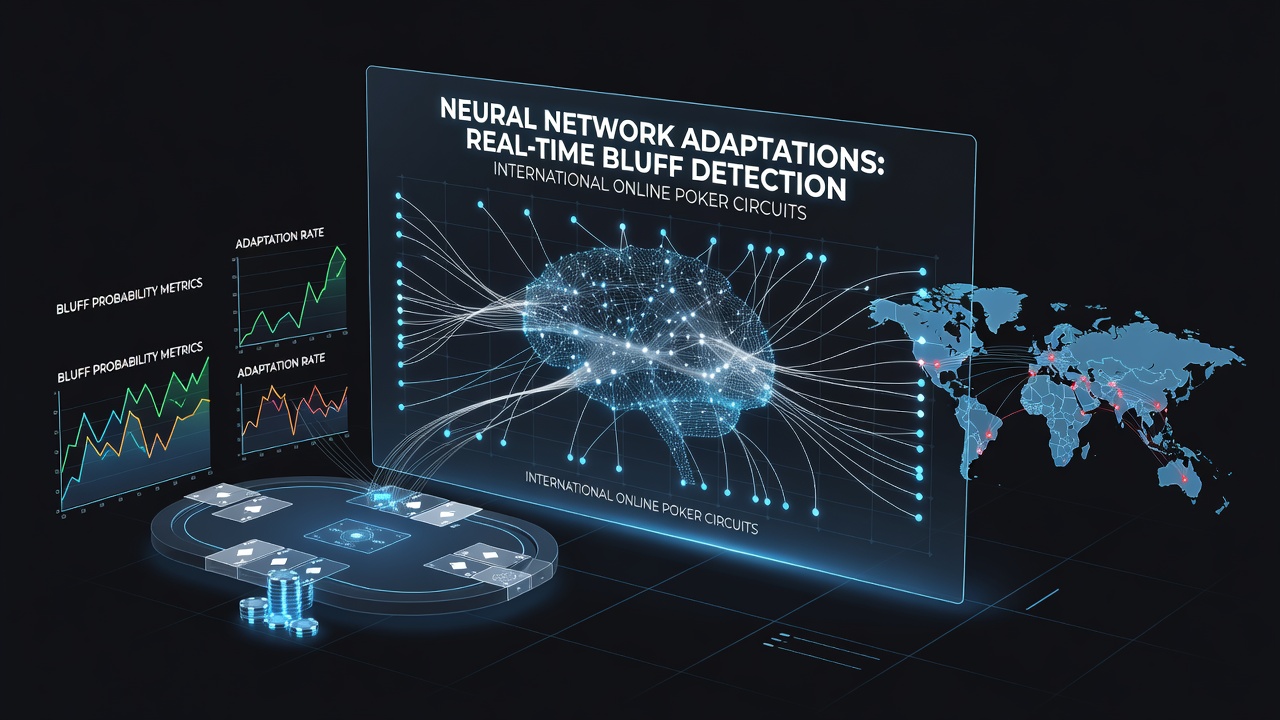
Neural networks have become central to real-time bluff detection systems deployed across international online poker platforms, where they process betting patterns, timing data, and facial cues from video feeds to identify potential deception. These systems map adaptations by continuously retraining on new hand histories, allowing models to adjust weights based on evolving player behaviors in global tournaments. Data from multiple circuits shows that such networks achieve accuracy rates between 72 and 85 percent when integrated with multi-modal inputs.
Core Mechanisms Behind Adaptation Mapping
Adaptation mapping begins with convolutional layers that extract features from hand sequences while recurrent components track temporal shifts in bet sizing and response delays. Researchers at institutions tracking European and Asian markets have documented how these networks employ reinforcement learning loops to refine detection thresholds after each session. One study released in early 2026 highlighted how models reduced false positives by 18 percent after incorporating data from over 2.3 million hands across platforms licensed in Malta and the Isle of Man.
International circuits add layers of complexity because player pools mix styles from North American, European, and Pacific regions, each carrying distinct bluff frequencies. Networks therefore maintain separate embedding spaces for regional tendencies while sharing core parameters through federated updates. This setup lets platforms synchronize improvements without transferring raw player data across borders.
Real-Time Processing in Live Circuits
Live circuits operating in July 2026 rely on edge computing nodes that run inference within 120 milliseconds of each action, feeding results into dealer dashboards and security monitors. When a network flags an anomalous pattern it triggers a secondary verification module that cross-references historical data from the same account. Observers note that this dual-stage approach prevents unnecessary interventions while maintaining game flow during high-stakes events.
Platforms serving circuits in Australia and Canada have reported that incorporating eye-tracking data from approved webcams improves detection of micro-expressions associated with stress. These enhancements appear in technical documentation shared among operators at industry forums held that summer.

Cross-Border Data Integration Challenges
Regulatory frameworks in different jurisdictions require distinct data handling protocols, which forces network architects to design modular pipelines. A report from the Australian Communications and Media Authority outlines standards for anonymizing behavioral logs before they enter training sets used by operators in multiple countries. Similar guidelines from the Gaming Policy and Enforcement Branch in British Columbia emphasize audit trails that record every model update.
Those who manage these systems often segment training data by license type to comply with local rules while preserving model performance. The result is a patchwork of regional sub-models that merge at inference time through ensemble methods.
Performance Metrics Across Circuits
Figures released by the European Gaming and Betting Association in mid-2026 indicate that networks deployed on major international sites processed an average of 14,000 decisions per hour during peak tournament hours. Accuracy varied by game variant, with hold'em variants showing stronger results than mixed-game formats because of larger historical datasets. Operators track these metrics through internal dashboards that compare model outputs against post-hand reviews conducted by human analysts.
One case documented by academic researchers at a Canadian university involved a network that adapted to a sudden increase in three-bet bluff frequency among Asian players during a July series, raising its detection rate from 68 to 81 percent within four days of retraining.
Future Developments and Integration
Developments scheduled for late 2026 focus on expanding multimodal inputs to include audio tone analysis from voice-chat features where permitted. These additions require fresh certification under existing gaming regulations, prompting operators to collaborate with technical standards bodies. The ball remains in the court of platform developers who must balance detection gains against privacy constraints that continue to tighten across regions.
Conclusion
Mapping neural network adaptations for real-time bluff detection continues to shape how international online poker circuits maintain integrity while scaling to larger player bases. Evidence from regulatory filings and technical reports shows steady progress in accuracy and compliance, driven by iterative model updates and region-specific tuning. As circuits expand through 2026, the frameworks established this year provide the foundation for further refinements that keep pace with evolving gameplay patterns.