How Artificial Intelligence Algorithms Refine Opponent Modeling Techniques During High-Stakes Virtual Card Competitions
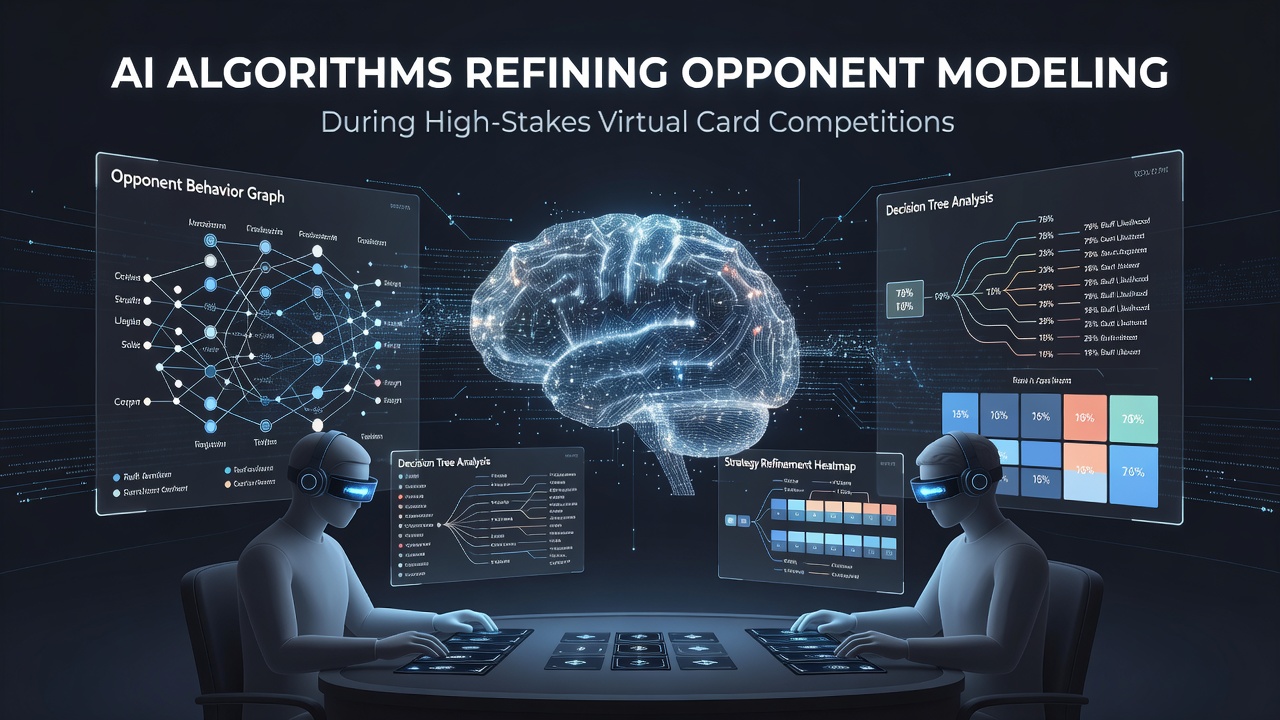
Artificial intelligence algorithms have transformed opponent modeling in high-stakes virtual card competitions by processing vast datasets of player actions, betting patterns, and decision trees in real time. Researchers at institutions like Carnegie Mellon University developed core methods such as counterfactual regret minimization that allow systems to build detailed profiles of opponents without relying on static rules. These profiles update continuously as new hands unfold, incorporating variables like position, stack sizes, and historical tendencies that human players might overlook during intense sessions.
Virtual platforms host tournaments where prize pools exceed several million dollars, and AI tools assist both participants and observers in dissecting gameplay. Data from these environments shows that algorithms identify subtle shifts in aggression levels or bluff frequencies by clustering similar situations across thousands of hands. Observers note that such refinement happens through iterative simulations where the system tests hypothetical responses against observed behaviors, adjusting weights on each variable to minimize prediction errors over time.
Core Mechanisms Behind Opponent Modeling
Algorithms refine models by combining supervised learning on labeled datasets with reinforcement techniques that reward accurate forecasts of future moves. In practice this means tracking metrics like continuation bet frequency on specific board textures or fold rates to three-bet scenarios. The system then generates probability distributions for each possible action an opponent might take, allowing predictive adjustments during subsequent rounds. Studies indicate these distributions tighten as more data accumulates, often reaching usable accuracy after fewer than fifty hands against consistent players.
High-stakes environments add layers of complexity because participants frequently adjust their own styles mid-session to exploit perceived weaknesses. AI counters this by maintaining multiple parallel models, one for each detected strategy shift, and switches between them based on statistical confidence thresholds. This multi-model approach prevents overcommitment to outdated assumptions while preserving historical context that remains relevant across longer matches.
Integration with Real-Time Decision Engines
Modern systems embed opponent models directly into decision engines that output recommended actions for each street. The integration occurs through value iteration processes that weigh immediate pot odds against long-term expected value derived from modeled opponent responses. When an algorithm detects an opponent who over-folds to river bets, it increases the frequency of thin value bets in similar spots without altering its own baseline strategy too dramatically.
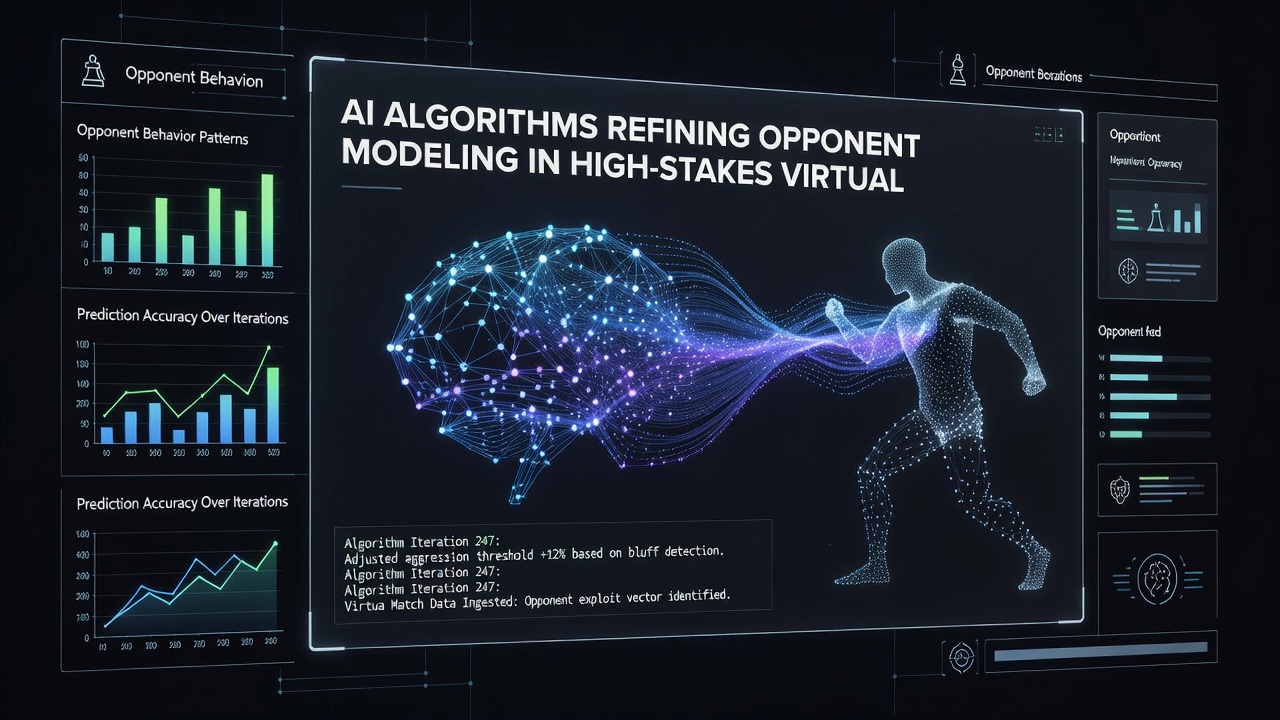
July 2026 brought several major online series where platforms reported record participation numbers, and analysts tracked how AI-assisted modeling influenced final table outcomes. Figures reveal that players employing refined models achieved higher average return on investment in heads-up and short-handed formats compared with earlier years. The improvements trace back to better exploitation of recreational entrants whose patterns remained more predictable even under pressure.
Challenges in High-Variance Settings
High-stakes virtual card competitions introduce variance through random card distributions and occasional strategic deviations that challenge even sophisticated models. Algorithms address this by applying variance reduction techniques such as action abstraction and range compression that focus computational resources on the most probable decision branches. Yet occasional outliers still force recalibration, and systems often incorporate uncertainty estimates that widen confidence intervals when data points fall outside established clusters.
Security considerations also arise because some competitors attempt to feed misleading information through deliberate play variations designed to poison model accuracy. Defensive algorithms counter these efforts by applying outlier detection filters and cross-referencing actions against broader population baselines maintained by platform operators. Research institutions continue publishing papers that detail these safeguards while noting the ongoing arms race between modeling precision and adversarial adaptation.
Future Directions and Industry Applications
Academic and industry collaborations explore extensions of current techniques into multi-player scenarios where opponent interactions become interdependent. Graph neural networks now appear in experimental setups to capture relational dynamics between multiple participants at a single table, moving beyond isolated pairwise modeling. These advances build on earlier successes in two-player limit games and aim to scale effectively as computational resources expand.
Regulatory bodies in regions such as the European Union and Australia monitor the deployment of AI tools in licensed platforms to ensure fair play standards remain intact. Reports from these agencies highlight the importance of transparency requirements around automated assistance while recognizing that such technologies already shape competitive landscapes in measurable ways. Industry organizations track adoption rates across different game variants and publish aggregated performance metrics that inform ongoing development priorities.
Conclusion
Artificial intelligence continues to sharpen opponent modeling capabilities through layered statistical methods and adaptive learning loops that respond to the fluid nature of high-stakes virtual card competitions. The techniques deliver measurable edges when applied consistently across large sample sizes, and ongoing refinements promise further gains as new algorithmic architectures emerge. Platforms and researchers alike document these developments through shared datasets and case analyses that benefit the broader community of players and technologists working in this space.