Exploring Synchronization Challenges Between Live Dealer Streams and Player Device Latencies During Peak Gaming Hours

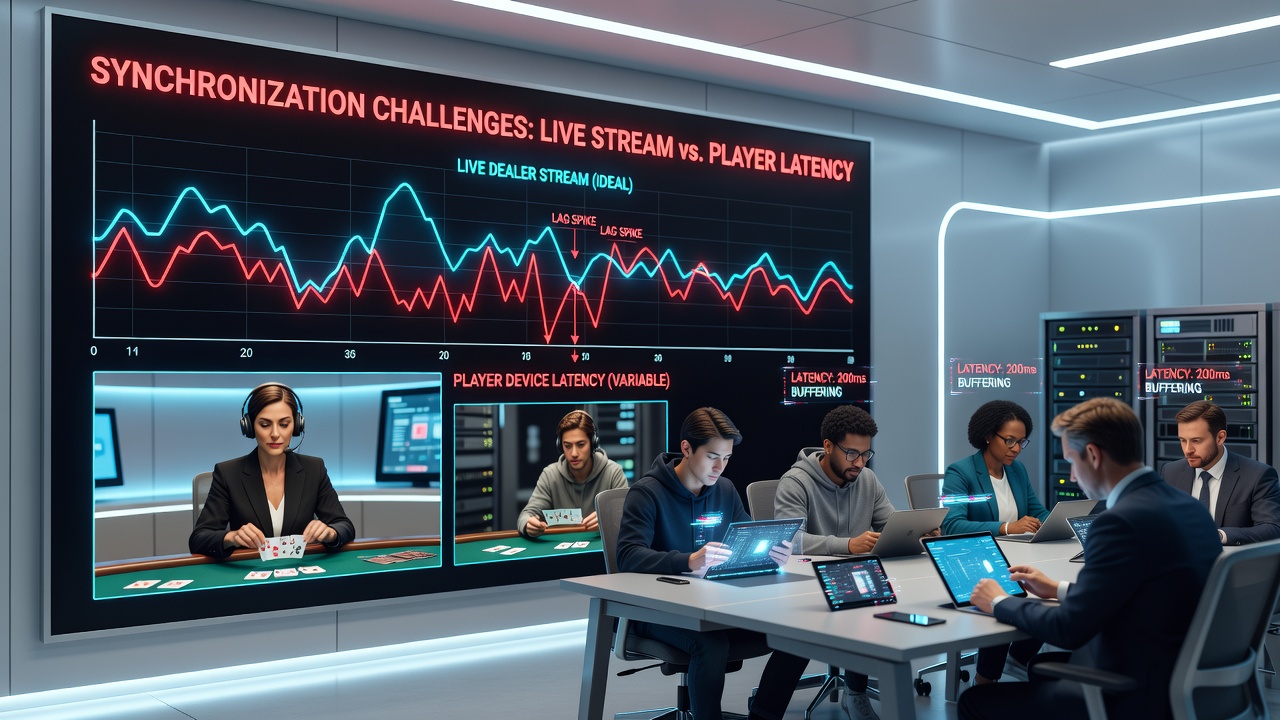
Live dealer platforms transmit real-time video feeds from physical tables to remote players, yet device processing times create noticeable offsets when network traffic surges. These offsets emerge because video packets travel through shared infrastructure that experiences congestion during evening rushes and weekend peaks, while individual phones and tablets decode streams at varying speeds based on hardware age and connection type.
Core Technical Factors at Play
Streaming protocols rely on adaptive bitrate adjustments that lower quality when bandwidth drops, yet this adjustment often lags behind sudden spikes in simultaneous connections. Players using older devices encounter additional decoding delays because their processors handle compressed video frames slower than newer models equipped with dedicated media chips, and those delays compound when multiple players access the same table during high-traffic periods such as July 2026 holiday weekends when traffic reports showed sustained increases across major platforms.
Network operators record that latency variance widens when regional data centers reach capacity limits, forcing packets to reroute through longer paths. This rerouting adds milliseconds that disrupt the perceived timing between a dealer’s card reveal and the player’s screen update, creating situations where bets appear to close before the visual cue arrives.
Impact on Player Experience and Platform Operations
Operators monitor complaint logs that rise sharply after 8 p.m. local time in densely populated markets, with many entries citing missed decisions or repeated buffering. Research from the University of Sydney’s Digital Gaming Lab indicates that average end-to-end delay can increase by 180 to 320 milliseconds under peak load, a range that exceeds the threshold where most users notice desync. Data from the same study shows that mobile users on 4G networks experience greater variance than those on fiber connections, because cellular handoffs introduce unpredictable jitter during congested hours.
Platform teams respond by deploying edge servers closer to population centers and implementing predictive buffering that preloads short video segments. These measures reduce but do not eliminate the gap, since device-side rendering remains outside operator control. One Australian regulatory review released in early 2026 highlighted that synchronization complaints accounted for 14 percent of all technical support tickets logged by licensed operators during the previous quarter.
Regional Regulatory and Infrastructure Responses
Authorities in Ontario track operator performance metrics through mandatory reporting that includes latency statistics submitted quarterly. Figures reveal that platforms failing to maintain sub-500-millisecond average response times during peak windows receive compliance notices, prompting investments in additional content delivery nodes. Similar frameworks operate in several European jurisdictions where national gaming boards require disclosure of stream quality statistics alongside financial reports.
Industry associations such as the European Gaming and Betting Association publish guidelines encouraging use of WebRTC protocols that allow direct peer-assisted delivery, reducing reliance on centralized servers during high-demand intervals. Implementation varies, with some operators integrating these protocols only for desktop clients while maintaining traditional HLS streams for mobile apps to preserve compatibility across older operating systems.
Emerging Mitigation Approaches
Developers experiment with client-side synchronization markers that align audio cues with video frames, allowing devices to compensate for known processing delays by shifting the displayed timeline slightly. Tests conducted by independent labs show this technique narrows perceived offset by roughly 40 percent on mid-range smartphones, although accuracy depends on accurate device profiling at session start.
Cloud rendering services that shift decoding tasks away from the player device represent another avenue under active trial. Early deployments in Canadian markets during summer 2026 demonstrated reduced variance when rendering occurred on remote GPUs, yet bandwidth requirements increased because uncompressed frames traveled the final mile. Operators continue to weigh these trade-offs against existing adaptive streaming investments.
Conclusion
Synchronization between live dealer streams and player devices remains an ongoing engineering focus shaped by infrastructure limits, hardware diversity, and fluctuating demand patterns. Reports from multiple jurisdictions document measurable delays during peak windows, while technical teams deploy layered solutions that address different segments of the delivery chain. Continued monitoring through regulatory channels and academic studies provides data that informs incremental improvements without resolving every variable introduced by consumer hardware and network conditions.